Furnace Repair Help for Homeowners
Request an estimate before work starts
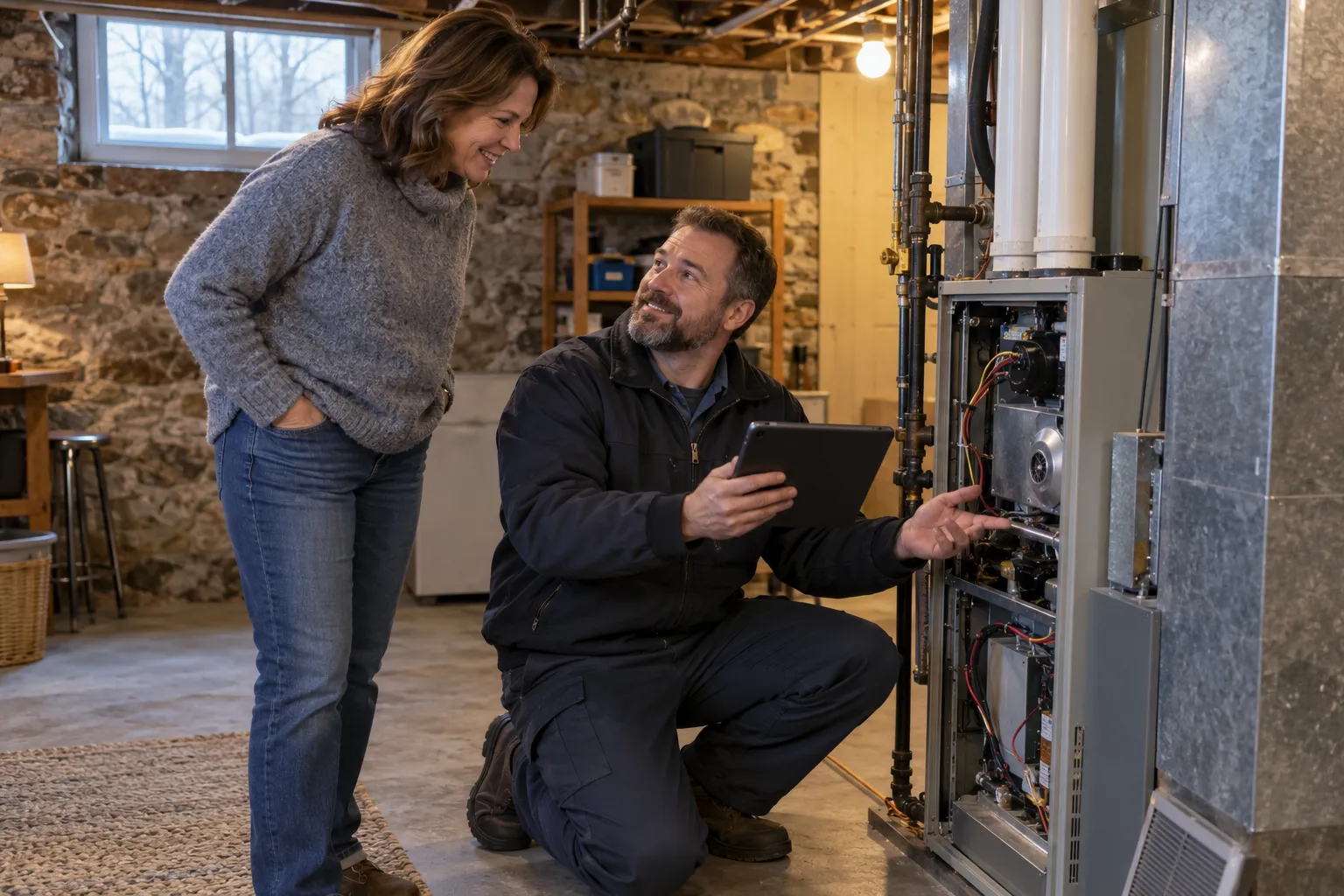
A furnace that stops working in cold weather is worrying. You might hear clicking, feel cold air, or notice a smell you can't place. Take a breath. Most furnace problems have a clear cause, and there are usually a few ways to handle them. Furnace repair can mean ignition trouble, a worn blower part, a dirty sensor, or a thermostat fault in your heating and cooling system.
Connectionsjapan Heating & Air is a referral service. It does not do the work. You describe what is happening, and a local provider in our network can look at the furnace, explain the likely next steps, and put an estimate in writing before anything starts. You stay in charge of every decision, and there is no obligation to say yes.
Smell Gas? Step Outside First
If you smell rotten eggs or think gas is leaking, stop reading and go outside. Leave the door open behind you. Don't flip switches, use a lighter, or try to start the furnace.
From outside, contact your gas utility or emergency services. Wait until they say the home is safe. Then you can look for a provider.
Know Your Options Before Work Starts
A cold house makes everything feel rushed. Take one slow breath. Most furnace problems have more than one possible fix, and you have every right to understand them first.
Connectionsjapan Heating & Air is a referral service. A provider in our network does the work, never us. You get an estimate in writing before anything begins.
Quick Checks Before You Reach Out
These take a few minutes. They solve more problems than you might expect.
Look at the Thermostat
Make sure it is set to heat and the target is higher than the room. Fresh batteries help a lot.
Check the Power
Look at the breaker and at the switch near the furnace. It often looks like an ordinary light switch. Make sure the front panel is seated firmly, since many furnaces won't run with it loose.
Check the Filter
A clogged filter chokes airflow and can make the furnace shut itself off. If yours looks gray and packed, swap it.
Check the Fuel
If you heat with oil, make sure there is fuel in the tank. If you use gas, confirm the valve is open. Don't try to relight anything you're unsure about.
If none of this helps, stop there. Don't open the burner area or pull parts off.
Small Signs, Early
Furnaces usually whisper before they shout. Catching the whisper often means a smaller repair.
Strange Noises
Banging, squealing, or rattling usually means a part is worn, loose, or dirty.
Short Cycling
If the furnace turns on and off in short bursts, something is limiting heat or airflow.
Uneven Heat
One room stays cold while another feels warm. That can point to a weak blower or restricted airflow.
A Yellow or Flickering Flame
A gas flame should look steady and blue. Yellow flame, soot, or a musty burning smell deserves a provider's attention soon. Test your carbon monoxide alarms too.
What Happens During a Repair Visit
The usual path is simple. The provider asks what you've noticed. Then they look at the thermostat, filter, ignition, burner, blower, and venting.
Once they find the cause, they explain it in plain words. You get a written estimate. You decide. Only then does work start. Many providers carry common parts, though some parts may need to be ordered.
Common Furnace Repairs
Here are the fixes that come up most often:
- Igniter or pilot parts: for a furnace that clicks but never lights.
- Flame sensor cleaning or replacement: a common reason a furnace starts, then quits.
- Blower motor or capacitor: when you hear the burner but feel little warm air.
- Control board or wiring: for random shutoffs or no response at all.
- Draft inducer or venting: safety parts that stop a furnace from running when airflow is wrong.
- Oil burner service: nozzle, filter, and cleaning for oil-fired systems.
Cold Winters and Older Homes
Long cold seasons mean long run times, and that wears parts down. Older homes add their own quirks. Tight basement furnace rooms, aging ductwork, and stone or block foundations can all affect airflow and moisture around the equipment.
Spring snowmelt can bring damp basements, which isn't kind to controls near the floor. Tell the provider about your home's layout. It helps them spot likely causes faster.
Repair or Replace Your Furnace?
This is the big question, and a good provider will show you both paths.
When Repair Makes Sense
The furnace is not very old, the problem is a single part, and it has run well until now.
When Replacement Makes Sense
The furnace is near the end of its life, repairs keep returning, or a cracked heat exchanger is found. Rising bills can be a clue too. Typing "furnace replacement near me" at this point is perfectly normal. Ask for a repair estimate and a replacement estimate side by side so you can compare.
Questions to Ask the Provider
- What caused the problem, and can you show me?
- Is this a lasting repair or a short-term fix?
- What does the estimate include: parts, labor, and any added fees?
- What warranty comes with the parts and the labor?
- Does it make sense to think about replacement, and what would that estimate look like?
- Is my carbon monoxide alarm doing its job?
Ready When You Are
No pressure here. You can request an estimate, read it, and think it over. A cold home is hard enough without feeling rushed.
Prefer to talk it through? Request a callback to check provider availability for your HVAC service needs.
What's Included
Ignition Problems
Furnace clicks but won't light? A provider can check the igniter, pilot, and gas or oil supply.
Airflow Faults
Weak blowers, dirty filters, and blocked vents can leave rooms cold and strain the system.
Sensors and Controls
Flame sensors, control boards, and thermostat wiring often cause shutoffs that seem random.
Written Estimates
Before any work begins, the provider explains the cause, your options, and the cost in writing.
Typical Furnace Repair Costs
These are typical U.S. ranges. Your price depends on the furnace, the part, and the home. Ask each provider for a written quote that lists parts and labor before you agree.
| Item | Typical range | Notes |
|---|---|---|
| Diagnostic visit | $75 – $200 | Often applied toward the repair if you proceed |
| Flame sensor or igniter | $100 – $400 | Common fix for a furnace that won't stay lit |
| Thermostat repair or swap | $100 – $350 | Higher for smart models or rewiring |
| Blower motor or capacitor | $300 – $1,500 | Motor type and furnace size change the price |
| Control board | $300 – $900 | Varies by brand and how hard the part is to find |
| Draft inducer motor | $300 – $800 | Needed to vent exhaust safely |
How It Works
Tell Us What's Happening
Share the symptoms you've noticed, like odd noises, cold rooms, or a furnace that won't start.
Get Matched With a Provider
A local provider in our network reaches out to talk through your situation.
Review the Estimate
The provider finds the cause, explains your options, and writes up the cost.
Decide Before Work Begins
You choose whether to go ahead. Nothing starts until you say yes.
Why Call Connectionsjapan Heating & Air
Know Your Options First
You learn the likely causes and choices before anyone picks up a tool or starts work.
Independent Local Providers
Providers in our network are independent businesses that serve homes like yours.
Estimate Before Work
Providers explain the problem and put the price in writing before starting.
No Pressure
Requesting an estimate carries no obligation. You decide what happens next.
Other Services
Need furnace repair in Philadelphia?
Tell us what your system is doing. Request an estimate and a local provider in our network will follow up with next steps. No obligation.
No obligationFurnace Repair FAQ
Why is my furnace running but not blowing hot air?
Common causes include a dirty filter, a failed flame sensor, a faulty igniter, or a thermostat setting issue. Check the filter and thermostat first. If heat is still missing, a provider can diagnose it.
Is it safe to keep using a furnace that makes strange noises?
It depends on the noise. A rattle may be minor, but banging or grinding can signal a failing part. If you smell gas or burning, stop using it and step outside.
How do I know if I should repair or replace my furnace?
Age, repair history, and the type of problem all matter. Ask a provider for repair and replacement estimates side by side, then compare costs and expected life.
Get in touch
Tell us what your system is doing. Request an estimate and a local provider in our network will follow up with next steps. No obligation.
No obligation